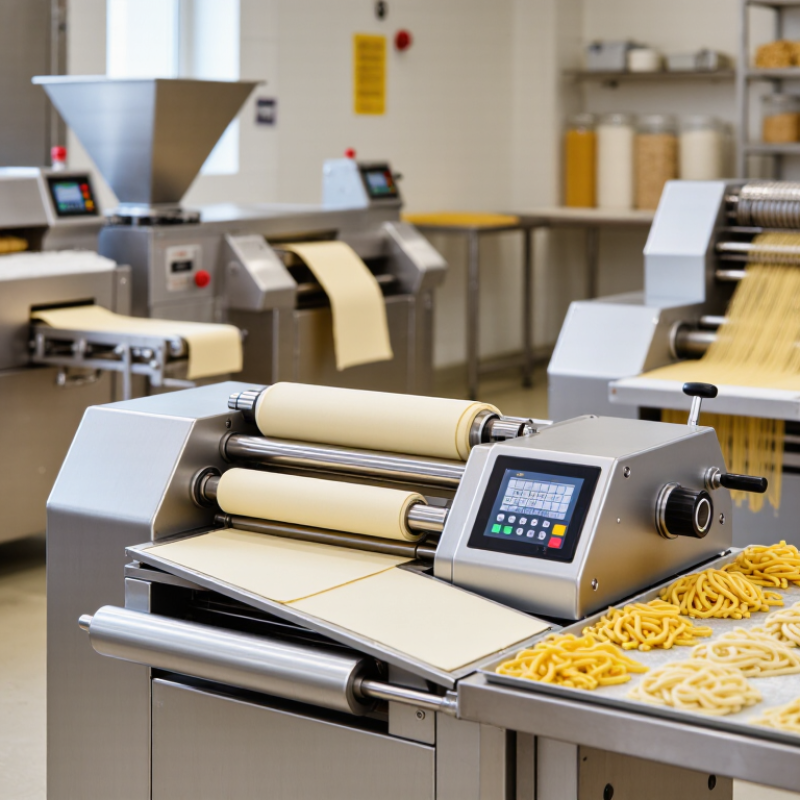
The 2026 global pasta equipment market will demand more than attractive machinery. Buyers will seek dependable output, flexible formats, safer operation, and measurable operating costs. A modern Pasta And Noodle Maker may produce spaghetti, ramen, udon, macaroni, or filled pasta. Each format requires different pressure, cutting systems, dies, and moisture control.
Chef and pasta educator Evan Funke describes pasta as “a language.” This idea matters to equipment buyers. Machines must translate local recipes into consistent commercial results. A small restaurant may need a compact sheeter with quick cleaning. A factory may require continuous extrusion, automatic cutting, drying control, and digital monitoring. The correct choice depends on product goals, labor skills, production volume, and available space.
This guide examines the leading Pasta And Noodle Maker types for 2026. It compares countertop, semi-automatic, fully automatic, extrusion, sheeting, cutting, and multifunction models. It also considers stainless-steel construction, food-contact safety, energy use, voltage compatibility, spare parts, and after-sales support. These details can decide whether a machine becomes a reliable asset or an expensive interruption.
No machine is perfect. Even advanced systems need trained operators and regular maintenance. A glossy specification sheet can hide practical weaknesses. Cleaning time may be underestimated. Local service may also be limited. Global buyers should test dough performance, inspect finished samples, and request transparent warranty terms before purchase. The strongest decision combines technical evidence, hands-on experience, and realistic expectations.
Pasta and noodle makers are machines that mix, shape, cut, or process dough into consistent products. Their designs differ according to ingredients, production volume, and final shape. A small shop may need a countertop roller and cutter. A factory usually requires continuous feeding, extrusion, drying, or cooling equipment. The machine is not the product itself. It is one part of a controlled production line.
The main category is the roller-and-cutter maker. It presses dough into sheets, then cuts strips for products such as flat noodles or lasagna. Extrusion machines push dough through shaped dies. They can produce tubes, spirals, shells, and many other forms.
Fresh noodle machines often combine mixing, sheeting, cutting, and portioning in one frame. Hybrid systems offer flexible output, but their adjustments can be less intuitive. No category is perfect.
Buyers should check dough hydration, flour type, die material, cutting accuracy, and cleaning access. For example, a machine handling firm dough may need stronger drive components and wider feed openings. A restaurant may value quick changeovers more than maximum hourly output. A large processor may prioritize automation, safety guarding, spare parts, and stable temperature control. Capacity figures also need careful reading. They may describe ideal dough, not everyday production. Operators sometimes discover this difference after installation. That detail deserves more attention.
Pasta and noodle makers differ mainly in how they shape dough. Manual roller cutters flatten dough between adjustable metal rollers. A separate cutter then produces ribbons, sheets, or narrow noodles. They suit small restaurants, cooking schools, and buyers who value hands-on control. The operator must adjust dough thickness carefully. Small changes affect cooking time and texture.
Electric sheeting machines use motors to feed dough through rollers steadily. They reduce fatigue and improve batch consistency. Extrusion machines work differently. A screw pushes mixed dough through a shaped die, creating tubes, spirals, or long strands.
Dough moisture matters greatly. Too much water can cause sticking, while dry dough may crack near the die.
Automatic units can mix, knead, shape, and cut in one workflow. Some models include interchangeable dies for regional noodle styles. In practical trials, cleaning often takes longer than expected. Corners around cutters can retain flour paste. That detail is easy to miss.
Buyers should inspect removable food-contact parts, motor cooling, voltage compatibility, and local service access. Safety guards and clear operating instructions also deserve close attention.
A powerful machine is not always the best choice. Production volume, dough recipes, available labor, and cleaning habits should guide the decision.
Even experienced operators may need several test batches before finding the right moisture level.
Global pasta demand continues to support investment in practical production equipment. The International Pasta Organisation reported more than 17 million tonnes of pasta consumption worldwide in 2022. Manual machines suit small restaurants, cooking schools, and market stalls. They offer direct control over dough thickness and cutting speed. Operators can feel dry edges before adjusting hydration. The trade-off is clear: output depends heavily on worker skill and stamina.
Electric machines improve consistency without requiring a full production line. A variable-speed motor, stainless-steel rollers, and removable parts simplify daily use. The U.S. Department of Energy notes that electric motor systems can represent a major share of industrial electricity use, so buyers should inspect motor efficiency carefully. A low purchase price may hide higher energy costs. That matters.
Industrial machines target factories producing continuous batches. Automated kneading, extrusion, drying, and portion control reduce handling and improve repeatability. The OECD-FAO Agricultural Outlook 2024–2033 expects global wheat demand to keep expanding, strengthening the case for scalable processing equipment. However, capacity figures can be misleading. A machine rated for 300 kilograms per hour may deliver less with high-hydration dough, frequent shape changes, or cleaning interruptions. Buyers should request test results using their own flour, recipe, and target moisture level. That step is often skipped. Mistakes become expensive.
Choosing a Pasta or Noodle Maker for Global Markets
Global buyers should select equipment by product, plant conditions, and service access. The pasta market continues to expand, while Asian-style noodles require different forming and drying controls. Grand View Research reported that the global pasta market was valued at approximately USD 42 billion in 2023. Its forecast also indicates steady growth through 2030. IMARC Group reported similar momentum in the broader noodles market. These figures support investment, but they do not guarantee profit.
A maker for dried pasta needs stable extrusion pressure, uniform cutting, and controlled moisture removal. Fresh noodle production may need faster forming, chilled water handling, and shorter cleaning cycles. Check output in kilograms per hour, not only brochure claims. A 300-kilogram line may perform poorly with humid flour or unstable power. Food-contact parts should resist corrosion and allow tool-free inspection. Confirm electrical standards, documentation, spare-part lead times, and local technician coverage. Small gaps here become expensive delays.
Tips: Request production samples using your own flour or dough. Test the machine for eight hours, including cleaning and restart. Compare energy use, water demand, waste rate, and changeover time. Ask for independent certification records, not informal assurances. A lower purchase price can be misleading. Forecasts can also be wrong. Build a decision sheet with conservative capacity, seasonal demand, and local operating costs. Reports from the International Trade Centre and national customs databases can help verify import trends before selecting a machine type.
2026 Top Pasta And Noodle Maker Types for Global Buyers
Manual rollers, countertop extruders, and continuous production lines serve different purchasing needs. Manual machines suit small kitchens and product testing. Electric extruders offer faster output, but they require stable power and careful dough control. Industrial lines deliver consistent volume, yet they demand trained operators, floor space, and planned maintenance.
Safety should guide every comparison. Look for enclosed moving parts, accessible emergency stops, non-slip feet, and clear operating instructions. Food-contact surfaces should resist corrosion and allow complete cleaning. Flour dust can settle around motors and switches. Keep those areas dry. Never remove a safety guard to save time. That shortcut can create a serious hazard. Electrical requirements also differ between markets, so buyers should confirm voltage, frequency, grounding, and applicable local certifications before ordering.
Maintenance affects product quality as much as machine life. Clean rollers, dies, cutters, and trays after each production cycle. Dry them fully before storage. Follow the manual for lubrication, belt checks, and seal replacement. Ask suppliers about spare parts, technician response, training, and warranty limits. A low purchase price may hide expensive downtime. Test local dough recipes before approval, because hydration and flour strength change performance. No machine is maintenance-free. Even a reliable unit may frustrate operators when cleaning takes longer than expected. That weakness deserves honest review, not optimistic sales language.
| Machine Type | Best-Suited Products | Indicative Capacity | Main Forming Method | Typical Utilities | Key Safety Requirements | Routine Maintenance | Purchasing Considerations |
|---|---|---|---|---|---|---|---|
| Manual or Tabletop Pasta Extruder | Fresh spaghetti, macaroni, short-cut pasta, and specialty dough products for restaurants, culinary schools, and small shops. | Approximately 5–30 kg/h, depending on dough formulation and operator loading. | Pressure extrusion through interchangeable dies; cutting is usually manual or semi-automatic. | Single-phase electricity is common; compressed air is generally not required. | Use guarded moving parts, a stable work surface, food-contact materials, and an accessible emergency stop where powered cutting is included. | Clean dies and dough-contact parts after each use; inspect seals, fasteners, and cutter alignment; keep electrical parts dry. | Check die availability, cleaning time, voltage compatibility, spare-part access, and whether tools can be removed without damaging food-contact surfaces. |
| Automatic Single-Screw Pasta Extruder | Long and short pasta for small-to-medium commercial production, including durum-wheat and some gluten-free formulations. | Approximately 50–250 kg/h; actual output depends on screw diameter, die design, dough moisture, and cutting speed. | Continuous screw extrusion with die forming and mechanical cutting for short products. | Three-phase power is common; some models use cooling water or an integrated vacuum system. | Interlocked guards, emergency stops, overload protection, safe die-changing procedures, and lockout during cleaning are essential. | Flush and clean the extrusion chamber; inspect screw, barrel, die, cutter, bearings, belts, and electrical connections according to the service schedule. | Compare continuous output, vacuum capability, die materials, recipe control, cleaning access, motor efficiency, and local technical support. |
| Twin-Screw Pasta Extruder | Specialty pasta, vegetable-enriched dough, high-fiber formulations, and products requiring stronger mixing and conveying control. | Approximately 100–500 kg/h, subject to formulation, screw configuration, and die size. | Co-rotating or counter-rotating screw conveying, mixing, and extrusion through a shaped die. | Three-phase electricity; cooling water or temperature-control circuits may be required. | Guard screw-access areas, use temperature and pressure protection, prevent unexpected restart, and apply formal lockout/tagout procedures. | Monitor screw wear, barrel clearances, gearbox oil, seals, cooling circuits, sensors, and die condition; remove residual dough promptly. | Select based on formulation flexibility, torque rating, cleanability, modular screw design, control-system language, and lifecycle operating cost. |
| Pasta Sheeter and Roller Cutter | Lasagna sheets, fettuccine, tagliatelle, dumpling wrappers, and other sheeted dough products. | Approximately 20–150 kg/h, depending on roller width, dough consistency, and number of passes. | Progressive roller reduction followed by slitting, cutting, or sheet sizing. | Electricity; compressed air is normally unnecessary unless pneumatic accessories are installed. | Guard nip points, rollers, and cutting blades; provide safe access controls and avoid loose clothing near rotating parts. | Brush or wipe rollers as specified; inspect scraper blades, belts, bearings, thickness settings, and cutter sharpness. | Confirm usable roller width, thickness range, product-changeover time, wash-down limitations, blade replacement cost, and floor-space requirements. |
| Automatic Noodle Sheeting and Cutting Line | Wheat noodles, alkaline noodles, knife-cut-style noodles, and dried or semi-dried strand products. | Approximately 100–1,000 kg/h, depending on line configuration and noodle width. | Dough compounding, repeated sheeting, gauge reduction, slitting, and portioning or folding. | Three-phase electricity; compressed air may be needed for actuators; water and drainage may be required for cleaning. | Use guarding around rollers and cutters, interlocked access doors, emergency-stop circuits, electrical protection, and hygienic zoning. | Clean flour deposits daily; check roller parallelism, cutter wear, chain and belt tension, lubrication points, sensors, and dough-contact surfaces. | Evaluate line synchronization, changeover flexibility, sanitation design, humidity control, utility consumption, installation access, and operator training. |
| Ramen or Alkaline Noodle Production Line | Fresh, chilled, frozen, or dried ramen-style noodles with controlled strand thickness and alkaline formulation. | Approximately 200–2,000 kg/h for integrated commercial lines; smaller modular systems are also available. | Mixing, resting, compound sheeting, reduction, slitting, wave formation, portioning, and optional steaming or drying. | Electricity; water, compressed air, refrigeration, steam, or thermal energy may be required according to the process. | Provide chemical-handling controls for alkaline ingredients, guarding, slip-resistant floors, steam protection, ventilation, and validated sanitation procedures. | Inspect cutters, pumps, rollers, conveyors, steam components, refrigeration circuits, sensors, and drainage; verify concentration and temperature controls. | Confirm target noodle dimensions, process type, shelf-life requirements, cold-chain needs, utility availability, automation level, and commissioning support. |
| Ravioli and Filled-Pasta Machine | Ravioli, tortellini, dumplings, and other filled pasta requiring controlled dough and filling portions. | Approximately 20–250 kg/h, depending on product size, filling type, and sealing speed. | Two dough sheets surround a metered filling deposit, followed by forming, sealing, and cutting. | Electricity; compressed air may be used for filling control or actuators. | Guard forming rollers and cutters, control pinch points, ensure safe filling-hopper access, and use hygienic product-contact materials. | Disassemble and clean filling paths; inspect seals, dosing components, forming molds, cutters, belts, and alignment of the sealing unit. | Assess filling accuracy, mold interchangeability, allergen changeover procedures, product-size range, cleaning validation, and spare-mold cost. |
| Drying, Portioning, and Packing System | Dried pasta and noodles requiring moisture reduction, controlled portions, weighing, and retail or food-service packing. | Approximately 100–5,000 kg/day for modular systems; industrial capacity varies widely with dryer size and drying profile. | Controlled-temperature and humidity drying, followed by cutting or weighing and packaging. | Electricity; thermal energy, ventilation, compressed air, and packaging-film handling may be required. | Protect hot surfaces and moving conveyors, manage dust, install electrical safeguards, and provide fire-risk controls where applicable. | Clean air filters and conveyors; inspect heaters, fans, humidity sensors, weighing cells, seal jaws, and packaging-film alignment. | Specify final moisture target, drying uniformity, energy consumption, product residence time, packaging format, measurement accuracy, and available floor height. |
| Buyer Note: Capacity figures are indicative planning ranges rather than guaranteed outputs. Actual performance depends on flour type, dough hydration, formulation, product dimensions, die or cutter configuration, operating schedule, and required finished-product moisture. Before purchase, request a production trial using the buyer’s own ingredients, verify applicable food-contact and electrical requirements, and obtain documentation for cleaning, risk assessment, installation, and preventive maintenance. | |||||||