

Choosing the right Welded Steel Pipe manufacturer requires more than comparing prices, production capacity, or attractive catalog photographs. Global buyers need evidence. Mill certifications, heat-number traceability, weld inspection records, dimensional control, coating performance, and export experience should guide the decision. A pipe may look perfect on arrival, yet poor documentation can create costly problems during installation.
Industry data shows why this market matters. The World Steel Association reported global crude steel production of approximately 1.89 billion tonnes in 2023, confirming the scale of the wider supply chain. Its World Steel in Figures 2024 report also highlights steel’s continuing role in construction, energy, transport, and industrial infrastructure. Meanwhile, OECD steel market updates point to persistent pressure from overcapacity, uneven demand, and changing trade conditions. These factors can influence lead times, pricing, and supplier reliability.
Edwin Basson, Director General of worldsteel, has described steel as “a critical material for our society, and it will remain so for a long time.” His observation applies directly to welded pipe procurement. Quality is not optional. It is operational insurance.
This guide reviews ten leading manufacturers for international buyers. The evaluation considers product range, welding technology, testing systems, standards compliance, logistics, and customer support. No ranking is flawless. A large producer may not suit a small project, and a competitive quotation can hide weak after-sales service. Buyers should still verify certificates, inspect samples, and confirm project-specific requirements before signing a contract. Supplier claims deserve attention, but independent evidence deserves more.
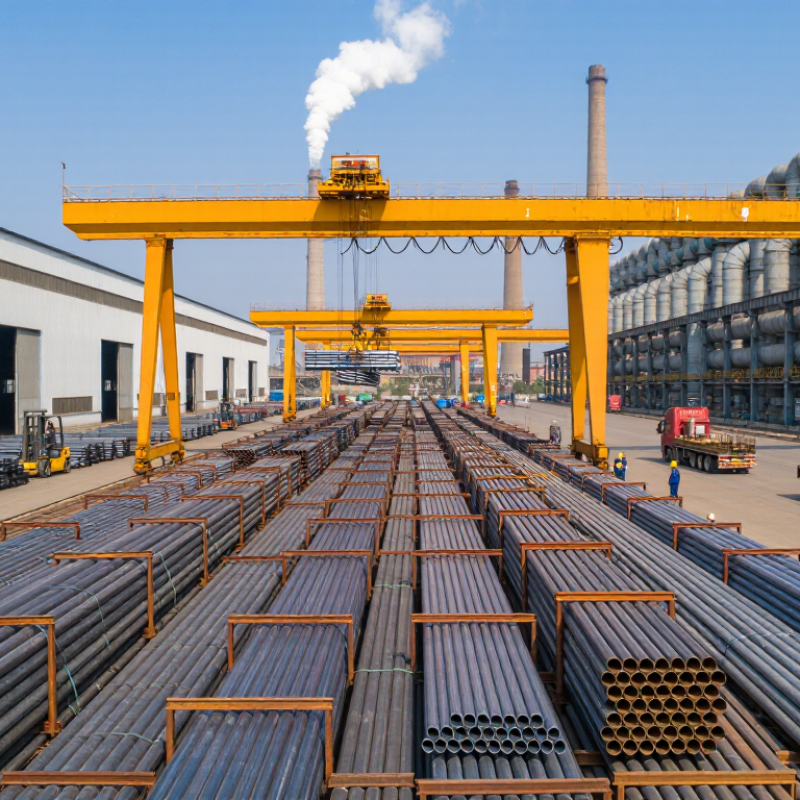
Welded steel pipes remain practical for water systems, construction, energy projects, and industrial transport. Their production starts with steel plate or coil, which is formed and joined along a seam. Electric resistance welded pipes suit many standard applications. Spiral-welded pipes can serve large-diameter water and structural projects. Longitudinally welded pipes offer controlled dimensions and consistent alignment. Each type has limits.
Use conditions should guide the purchase. Consider fluid type, pressure, temperature, soil conditions, and installation method. A water pipeline may need corrosion protection and durable external coating. A structural column requires reliable strength and accurate dimensions. For demanding service, buyers should review applicable standards, welding procedures, test reports, and traceability records. Do not choose by price alone. A cheaper pipe may require costly repairs, coating work, or early replacement.
Tips: Confirm outside diameter, wall thickness, length tolerance, and end preparation in writing. Request mill certificates, hydrostatic or nondestructive test records, and sample inspection photos. Check whether the coating matches the soil or fluid environment. Small details matter. It is easy to over-specify a pipe and waste budget. Yet under-specification creates greater risk. Review the full delivery route, including packing, port handling, and storage exposure. A careful buying checklist is useful, but it should be revised after every project.
Choosing among the 10 best welded steel pipe manufacturers requires more than comparing prices. I have learned that a polished website proves very little. A credible factory should provide its production route, welding procedures, inspection plans, and material traceability records. Ask whether heat numbers remain visible from steel coil to finished pipe. Small details matter.
A serious assessment includes a factory visit, live production checks, and independent testing. Watch how operators control welding speed, temperature, and alignment. Request records for ultrasonic testing, hydrostatic testing, dimensional checks, and coating thickness. Confirm that reports match the actual batch, not a convenient sample. The manufacturer should also explain which international standards apply to your project and how deviations are handled.
Capacity claims need careful questioning. Compare stated output with machinery, staffing, storage space, and recent delivery records. Speak with previous overseas buyers when possible. Check packaging, loading methods, export documents, and responses to damaged cargo. Clear communication is another quality signal. Slow answers before an order rarely improve afterward.
No audit is perfect. A factory can perform well during one visit and struggle during peak demand. Keep a written quality agreement, define acceptance criteria, and arrange pre-shipment inspection. I would also test a small order before committing to large volumes. That step costs time, but it may reveal inconsistent wall thickness, weak documentation, or unrealistic lead times. Reliability grows from evidence, not promises.
This neutral 100-point buyer assessment model prioritizes product conformity and quality assurance, followed by traceability, production capacity, export capability, delivery performance, and sustainability documentation. Buyers can verify each category through certificates, inspection records, factory audits, and contract performance data.
The ten manufacturers profiled here represent different strengths rather than identical product lines. Several operate integrated mills, while others specialize in ERW, HFW, or spiral submerged arc welding. Their scale matters. The World Steel Association reported about 1.89 billion tonnes of crude steel production in 2023, creating a broad industrial base for pipe production. Yet steel volume alone does not prove reliability.
The strongest profiles show traceable heat numbers, calibrated forming equipment, and weld testing at several stages. Some manufacturers focus on oil, gas, and water transmission pipes. Others produce galvanized tubes for construction, precision tubing for machinery, or heavy-wall sections for infrastructure. ISO 3183 and ASTM specifications frequently guide dimensional, mechanical, and hydrostatic requirements. Buyers should still examine the actual certificate, not only a website claim.
Export readiness separates many leading suppliers from ordinary mills. The better performers provide mill test certificates, packing photographs, inspection records, and clear tolerance data. UN Comtrade trade statistics also show how widely steel pipe moves across international supply chains, but shipping reach can hide uneven after-sales support. No profile is flawless. Some factories have excellent welding control but slower documentation. Others quote quickly but provide weak coating evidence. That gap deserves careful review.
Comparing Standards, Product Range, Capacity, and Export Services
Selecting a welded steel pipe manufacturer requires more than checking a low quotation. Standards should match the project’s pressure, fluid, and installation conditions. Common references include API 5L, ASTM A53, ASTM A106, and EN 10217. Buyers should request current mill certificates, chemical analysis, tensile results, and hydrostatic test records. Traceability matters. Each bundle should link back to a heat number and production batch.
Product range also reveals manufacturing depth. Reliable suppliers may offer ERW, SSAW, and LSAW pipes, with diameters from small utility sizes to large transmission sections. Ask about wall thickness tolerance, pipe length, beveling, threading, and surface coatings. Galvanizing, epoxy, and three-layer polyethylene systems suit different environments. Details matter here. A wide catalog means little if the required size remains outsourced.
Production capacity must be checked against real schedules, not website claims. Review monthly output, available forming lines, welding procedures, and inspection staffing. Export experience includes seaworthy packing, moisture protection, loading photographs, and accurate shipping documents. Confirm whether the supplier supports third-party inspection, pre-shipment checks, and container planning. Port distance can change delivery costs noticeably. One weakness remains easy to miss: a manufacturer may meet a standard but communicate poorly during delays. Test response quality before signing, and leave room for technical clarification when specifications are incomplete.
Global sourcing starts with a documented specification, not a supplier shortlist. Define outside diameter, wall thickness, grade, length, end finish, coating, and acceptance standard. For line pipe, align requirements with ISO 3183 or API 5L. For general-purpose pipe, ASTM specifications may apply. The World Steel Association reported 1.89 billion tonnes of crude steel production in 2023. That scale creates choice, but not automatic quality. A low quotation deserves questions.
Screen each manufacturer’s legal registration, export history, welding process, and actual production capacity. Ask for recent mill test certificates, heat numbers, welding procedure qualifications, and non-destructive testing records. Verify heat numbers against the pipe stencil and packing list. Require independent inspection for dimensional checks, hydrostatic testing, ultrasonic testing, or radiographic testing when risk justifies it. OECD steel reports have repeatedly flagged global excess capacity above 500 million tonnes. Capacity claims can therefore be inflated. A factory video proves little.
During an audit, watch one coil become one pipe. Check edge preparation, weld bead appearance, calibration, and coating thickness. Review calibration certificates, corrective-action logs, and rejected-pipe records. Those records often reveal more than polished presentations. Confirm payment terms, delivery milestones, packaging, insurance, and dispute procedures in writing. Request traceability samples before placing a full order. I would also compare two inspection agencies, because one familiar checklist may miss a practical weakness. Perfect documentation is uncommon. Unexplained gaps are not.

